
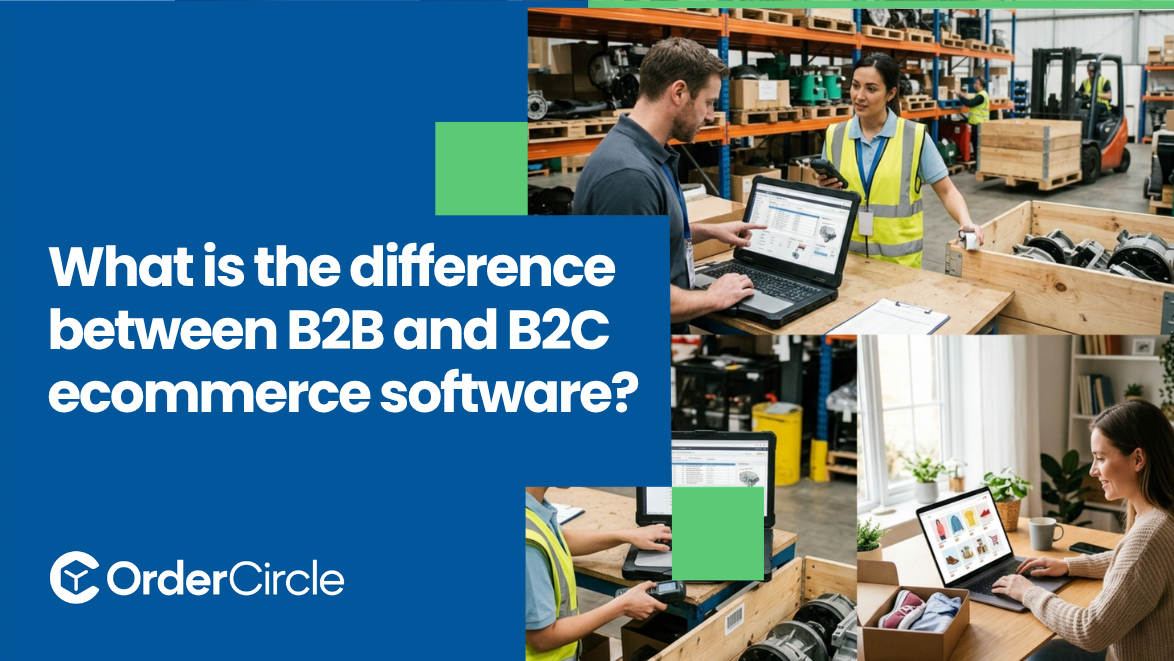
Your business model shapes which ecommerce software works best for you. B2B and B2C platforms serve different customers with unique daily needs. Using the wrong type creates broken workflows and frustrated buyers fast. You might be asking how a B2B ecommerce platform differs from B2C ecommerce software.
Quick Answer
A B2B ecommerce platform serves businesses that buy in bulk, with custom pricing and complex workflows. B2C ecommerce software targets individual shoppers wanting fast checkout and simple purchases. B2B needs account portals and payment terms while B2C focuses on speed and visuals. Understanding these differences helps you choose the right platform for your customers and growth goals today.
What Is a B2B Ecommerce Software?
B2B ecommerce software enables businesses to sell products to other businesses online effectively. It supports complex pricing, bulk order account management and payment terms that B2C platforms can't handle well. This software handles the unique needs of business buyers perfectly.
Who Uses B2B Ecommerce Platforms
Manufacturers, distributors and wholesalers use B2B platforms to sell to retailers, contractors and other businesses regularly. These sellers handle large orders, repeat purchases and negotiate pricing every single day. They need systems that support account management, complex workflows and bulk processing without manual work overhead.
Key Characteristics of B2B Ecommerce Solutions
B2B software includes features designed for business buyers rather than individual shoppers. These tools handle complexity while maintaining accuracy across large transactions and multiple users internally. The right system supports growth without constantly adding administrative burden to your team. Here are the main characteristics:
- Customer-specific pricing and negotiated contracts – Each account receives custom rates based on volume tiers or negotiated agreements, rather than fixed public pricing for everyone.
- Bulk cart and quick reorder functionality – Buyers add multiple items quickly and restock past orders in seconds instead of hunting through catalogs repeatedly each time.
- Account portals with order history – Business buyers access their account dashboard to view past orders, track shipments and manage user permissions easily themselves.
- Payment terms instead of instant checkout only – B2B accepts net-30, net-60 invoicing and credit accounts, rather than requiring immediate credit card payment for every order.
- Approval workflows for large purchases – Organizations set internal approval rules so employees need manager sign-off before completing high-value orders internally.
- Integration with backend business systems – B2B platforms connect to ERP inventory and accounting systems for automated data flow across all operations seamlessly.
What Is B2C Ecommerce Software?
B2C ecommerce software enables businesses to successfully sell products directly to individual consumers online. It prioritizes fast checkout, visual appeal and simple purchasing flows for single-item orders mostly. This software handles everyday shopper needs efficiently and reliably.
Who Uses B2C Ecommerce Platforms
Retail brands, boutiques and consumer product companies use B2C platforms to sell to individual shoppers consistently. These sellers focus on single-item purchases, visual appeal and fast delivery experiences every day. They need systems that convert visitors into buyers quickly and reliably every single time.
Key Characteristics of B2C Ecommerce Software
B2C software includes features designed for individual shoppers making quick purchase decisions naturally. These tools prioritize speed, simplicity and visual appeal over complex workflows or approval processes. The right system turns browsing into buying without friction or confusion for shoppers. Here are the main characteristics:
- One-click checkout options – Shoppers complete purchases instantly using saved payment info instead of filling out forms for every order.
- Product recommendations and cross-sells – The system suggests related items based on browsing history to increase basket size automatically without manual effort.
- Customer reviews and ratings – Buyers see peer feedback on products before purchasing, which builds trust and reduces hesitation before checkout.
- Promotional campaigns and discount codes – Retailers run time-limited sales and coupon offers to create urgency and consistently attract new customers.
- Mobile-responsive design – Storefronts adapt to phones and tablets so shoppers browse and buy smoothly on any device they use.
- Social media integration – Products can be linked to Instagram, Facebook, and other platforms, allowing shoppers to discover and purchase products through social channels.
Key Differences Between B2B and B2C Ecommerce Software
B2B and B2C ecommerce software differ significantly in audience, pricing, order size and workflow complexity. Understanding these differences helps you choose the best wholesale ecommerce platform for your specific business model. Each type serves distinct customer needs with unique features built for their purpose.
Target Audience
B2B targets businesses buying for operations, resale or production needs internally. B2C targets individual consumers buying for personal use at home. This difference shapes every feature from pricing to checkout design completely. Business buyers need account access while shoppers want speed constantly.
Pricing Structure
B2B uses custom pricing, negotiated contracts and volume tiers per account individually. B2C uses fixed public pricing with occasional promotions for everyone equally. B2B buyers expect different rates while B2C shoppers expect consistency always. This difference affects how pricing displays during browsing and checkout steps.
Order Size and Volume
B2B orders consistently involve bulk quantities and high transaction totals. B2C orders typically include single items or small baskets mostly. B2B systems support bulk carts, while B2C supports quick purchases easily. This difference drives cart design and inventory management approaches internally.
Customer Relationship Model
B2B builds long-term relationships with repeat accounts and negotiated terms yearly. B2C focuses on transactional sales with one-time or occasional buyers mostly. B2B needs account management tools, while B2C relies heavily on marketing automation. Relationship depth shapes support and retention strategies differently for each model.
Checkout and Purchasing Process
B2B checkout includes approval workflows, payment terms and account verification steps. B2C checkout prioritizes speed with one-click options and minimal steps only. B2B buyers plan purchases while B2C shoppers act on impulse quickly. This difference determines checkout complexity and friction levels for buyers. Cloud-based order management software helps manage these complex B2B checkout workflows by automating approvals, pricing rules, and account verification processes.
Payment Terms and Methods
B2B commonly supports net-30 invoicing and credit accounts. B2C requires instant payment through credit cards or digital wallets only. B2B buyers expect flexibility while B2C buyers expect immediacy always. This difference impacts cash flow and financial integration needs significantly.
Personalization and Account Management
B2B provides account-specific pricing catalogs and user permissions per organization internally. B2C offers personalized recommendations based on browsing history and preferences individually. B2B personalization serves business rules while B2C serves individual behavior constantly. This difference shapes how each platform customizes experiences for users.
Read Also: How do wholesalers manage large order volumes online?
Conclusion
B2B and B2C ecommerce software differ fundamentally in audience, pricing, order size and workflow complexity. B2B serves businesses with custom pricing, bulk orders, payment terms and account portals for repeat buyers. B2C serves individual shoppers with fast checkout, fixed pricing and visual appeal for quick decisions.
Choosing the wrong type creates friction for your customers and extra work for your team daily. Business buyers need features that B2C platforms don't provide, while shoppers want simplicity that B2B systems don't prioritize well. Match your software to your customer type for smooth operations and better long-term growth results.
If you sell wholesale and need B2B features, OrderCircle offers the right tools for your business model. Explore our platform to see how it handles bulk orders, custom pricing and account management effectively for scaling companies.
FAQs
Can one ecommerce platform handle both B2B and B2C?
Some platforms offer hybrid features but most specialize in one model type. True B2B needs like custom pricing and payment terms require dedicated B2B solutions mostly. The best wholesale ecommerce platform focuses on business buyers' needs rather than retail features.
Which ecommerce model is more profitable?
Profitability depends on your business type, not the model itself directly. B2B offers larger orders and repeat accounts while B2C drives volume through many small sales. Both work well when matched to your products and customers properly.
Why does B2B ecommerce require custom pricing?
Business buyers negotiate rates based on volume contracts and relationships over time. Fixed pricing doesn't work when accounts have different agreements signed. Custom pricing maintains accuracy and protects margins while supporting negotiated deals effectively.
What features are most important in B2C ecommerce software?
B2C shoppers prioritize fast checkout, mobile design and visual appeal strongly. Features like one-click buying, product reviews and recommendations drive conversions quickly. These tools reduce friction and help shoppers complete purchases without delays.
.svg)


