
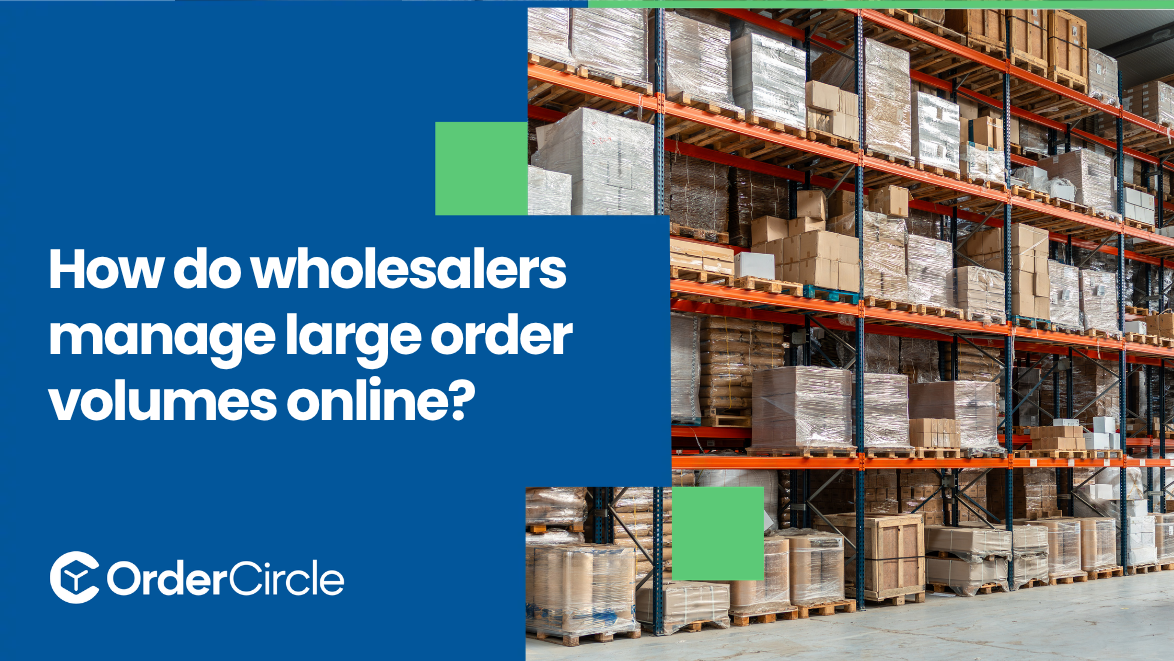
Wholesale businesses struggle when order numbers jump suddenly. Manual systems fail under pressure, and mistakes spread fast. Delays frustrate buyers while inventory errors cost real money. You might be wondering how wholesalers stay organized when handling bulk orders online.
Quick Answer
Wholesalers handle large order volumes through automation, centralized dashboards, and real-time inventory sync. Automated processing removes manual-entry errors, while centralizing channels prevents scattered tracking.
Real-time inventory stops overselling and bulk ordering speeds repeat purchases. Customer-specific pricing keeps accounts accurate and ERP integrations connect ordering to fulfillment. These methods work together to scale smoothly without adding daily chaos.
Methods for Efficient Wholesale Order Volume Management
Efficient wholesale order management requires systems that work faster than manual work. Automation handles repetition while centralization keeps data organized. Real-time updates prevent expensive mistakes and bulk options save time. Each method supports the others in building a workflow that scales with demand.
Using Automated Order Processing Systems
Automated systems capture orders instantly without staff typing data manually. They validate pricing rules and check credit limits automatically before forwarding orders. This eliminates human error and reduces processing time from minutes to seconds. Your team saves hours weekly and focuses on customer problems instead. Orders move faster through fulfillment when systems handle validation work.
Centralizing Orders from Multiple Sales Channels
Wholesale orders come from websites, marketplaces and sales reps daily. Centralizing them into one dashboard stops scattered tracking and duplicate work. Staff see every order in one place and process them systematically.
This organization prevents confusion when volume spikes during busy seasons. You avoid missing orders hidden in email threads or spreadsheets. Centralization makes scaling possible without adding more administrative staff.
Enabling Real-Time Inventory Synchronization
Inventory levels update instantly across channels as orders process through the system. Buyers see accurate stock before ordering and overselling becomes very rare. Warehouse staff know exact quantities available for allocation at any moment. This synchronization prevents backorders and consistently maintains strong customer trust. Stock mismatches disappear when all channels share the same live data source.
Offering Bulk Ordering and Quick Reordering Options
Bulk ordering lets buyers add multiple items quickly without clicking endlessly. Quick reordering saves past orders so repeat purchases take seconds, not minutes. These features reduce friction for large orders and naturally encourage larger basket sizes. Buyers appreciate speed when they need to restock inventory urgently. Faster ordering means more transactions complete without abandonment or delays.
Setting Up Customer-Specific Pricing and Catalogs
Different wholesale accounts receive different prices based on contracts and volume. Customer-specific pricing applies automatically during checkout without manual quote work. Each buyer can clearly see their authorized products and negotiated rates on screen. This accuracy prevents pricing disputes and protects your profit margins consistently. Manual pricing adjustments become unnecessary when systems enforce rules automatically.
Integrating Ecommerce Platforms with ERP/WMS Systems
Integration connects your ecommerce platform to enterprise resource planning systems (ERP) directly. Order data flows automatically into accounting, inventory and shipping modules without reentry. This connection eliminates data silos and ensures all departments work together. Your entire operation moves faster when systems communicate without manual handoffs. The best wholesale ecommerce platform delivers these integrations seamlessly for scaling businesses.
Key Technologies That Support High-Volume Wholesale Operations
Technology forms the foundation of modern wholesale operations. Each tool handles a specific part while working together as one system. Understanding these tools helps you choose the right stack for growth.
Ecommerce Platforms for Wholesale B2B Sales
Modern ecommerce platforms support wholesale needs, such as bulk carts and custom pricing. They replace phone orders with self-service portals buyers control completely. These platforms handle high traffic without slowing down during peak shopping times. Buyers access catalogs anytime and place orders without waiting on staff availability.
ERP Systems for Business Process Management
ERP systems connect finance, inventory and sales into one unified system. They automate accounting entries and track costs accurately across all orders. This integration prevents data silos that cause operational delays constantly. Your team can clearly see real-time financial data alongside order status updates.
Inventory Management Software
Inventory software tracks stock levels across multiple warehouses in real time daily. It updates availability as orders process and prevents selling items you don't have physically. Accurate stock data keeps buyers confident during the ordering process consistently. Stockouts become predictable when systems show trends before problems occur.
Order Management Systems (OMS)
OMS tools centralize orders from all channels into one organized dashboard view. They automatically route orders to fulfillment and track status updates at each stage. This centralization eliminates scattered spreadsheets and manual tracking work entirely. You reduce errors when one system handles all incoming order data.
Warehouse Management Systems (WMS)
WMS optimizes picking paths and packing efficiency inside warehouse facilities daily. It assigns tasks to workers based on order priority and item location. This system reduces fulfillment time and shipping errors significantly over time. Workers move faster when instructions show exact locations and quantities clearly.
Step-by-Step Order Management Workflow for Wholesalers
Every wholesale order follows a predictable path from placement through delivery. B2B ecommerce software helps automate and streamline this entire workflow, making it easier to manage high order volumes efficiently. Understanding each step helps you spot bottlenecks and improve efficiency where needed most.
Order Placement via Online Portal
Buyers place orders through self-service portals reliably, day or night. They browse catalogs, select quantities and check out without waiting on staff availability. This convenience eliminates the delays associated with traditional phone or email ordering methods. Orders enter the system instantly instead of sitting in unread emails.
Order Validation and Pricing Checks
The system validates orders automatically before forwarding them to fulfillment teams. It checks pricing rules, credit limits and minimum quantities per account settings. This step prevents errors that would require corrections and customer service calls later. Validation happens in seconds instead of hours of manual review work.
Inventory Allocation
Once validated, the system reserves inventory for each order immediately without delay. It deducts allocated stock from available counts to prevent overselling other orders. This real-time reservation consistently maintains high inventory accuracy across all active orders. Buyers see true availability before checkout completes successfully.
Picking, Packing, and Fulfillment
Warehouse staff receive picking instructions with item locations and quantities needed clearly. They collect products and pack orders securely and label them for shipping carriers. Efficient packing reduces damage rates and speeds delivery times to customers. Proper labeling ensures packages reach the right addresses without shipping errors.
Shipping and Delivery Tracking
Orders ship with tracking numbers that buyers can monitor online without calling support. The system updates order status automatically as packages move through carrier networks. Buyers stay informed about delivery dates without sending status inquiry emails. This transparency builds trust and reduces support team workload significantly.
Invoice and Payment Processing
Invoices are generated automatically after shipment and sent directly to buyer accounts. Payment systems process transactions securely and update account balances instantly online. Automated billing reduces administrative work and speeds cash flow into your business. Manual invoicing becomes unnecessary when systems handle everything automatically.
Signs Your Wholesale Business Needs Better Order Management Systems
Problem signs often appear before growth becomes completely uncontrollable for your team. Watching for these warning signals helps you upgrade systems before damage spreads further.
Frequent Order Delays
Delays happen when staff struggle with manual entry or scattered systems constantly. Orders regularly take longer to process and ship than customers expect. This pattern frustrates buyers and damages your reputation for reliability over time. Faster processing becomes possible when automation handles repetitive tasks instead. Cloud-based order management software helps eliminate delays by streamlining order entry and fulfillment workflows in real time.
Inventory Mismatches
Stock counts don't match what your system shows available online for buyers. Buyers order items you cannot ship and backorders pile up quickly. This mismatch results in refunds and lost trust among long-term accounts. Real-time sync prevents these problems by updating inventory across all channels.
Increasing Customer Complaints
Complaints rise when orders arrive late, wrong or incomplete regularly each week. Support teams spend more time fixing mistakes than building relationships with buyers. This drain on resources hurts long-term account growth and retention rates. Better systems reduce errors before they reach customers in the first place.
Difficulty Handling Growth
New orders overwhelm existing processes and staff capacity much faster than expected. You cannot add customers without constantly adding chaos to daily operations. This bottleneck stops revenue growth until systems improve and scale properly. Automation lets you handle more volume without hiring additional administrative staff.
Read Also: How does ecommerce software increase wholesale revenue?
Conclusion
Wholesalers manage large order volumes online by automating repetitive tasks and centralizing scattered data sources effectively. Automated processing eliminates manual errors, while centralized systems keep orders organized across all channels. Real-time inventory prevents overselling and bulk features speed up repeat purchases significantly.
Customer-specific pricing maintains accuracy and ERP integrations connect ordering to fulfillment efficiently without delays. These methods handle growth without adding operational chaos to daily workflows. Manual systems crumble under pressure, but digital solutions scale smoothly with increasing demand.
If you want to handle larger volumes without mistakes or frustrating delays, upgrading your order management system is the smart move for long-term success. Explore how OrderCircle automates wholesale ordering and inventory tracking for growing B2B brands today.
FAQs
Can ecommerce platforms support B2B wholesale operations?
Yes, modern platforms include wholesale features like bulk carts, custom pricing and account portals. They replace manual ordering with self-service systems buyers control completely.
How does automation improve wholesale order management?
Automation removes manual data entry and speeds fulfillment workflows across your operation. It validates orders, applies pricing rules and routes to the warehouse automatically without staff input. This reduces errors and frees staff for higher-value work instead of paperwork.
What is the biggest challenge in wholesale order processing?
The biggest challenge is coordinating inventory pricing and fulfillment across channels without errors happening. Manual systems cannot maintain real-time accuracy as volume grows rapidly.

.svg)


