
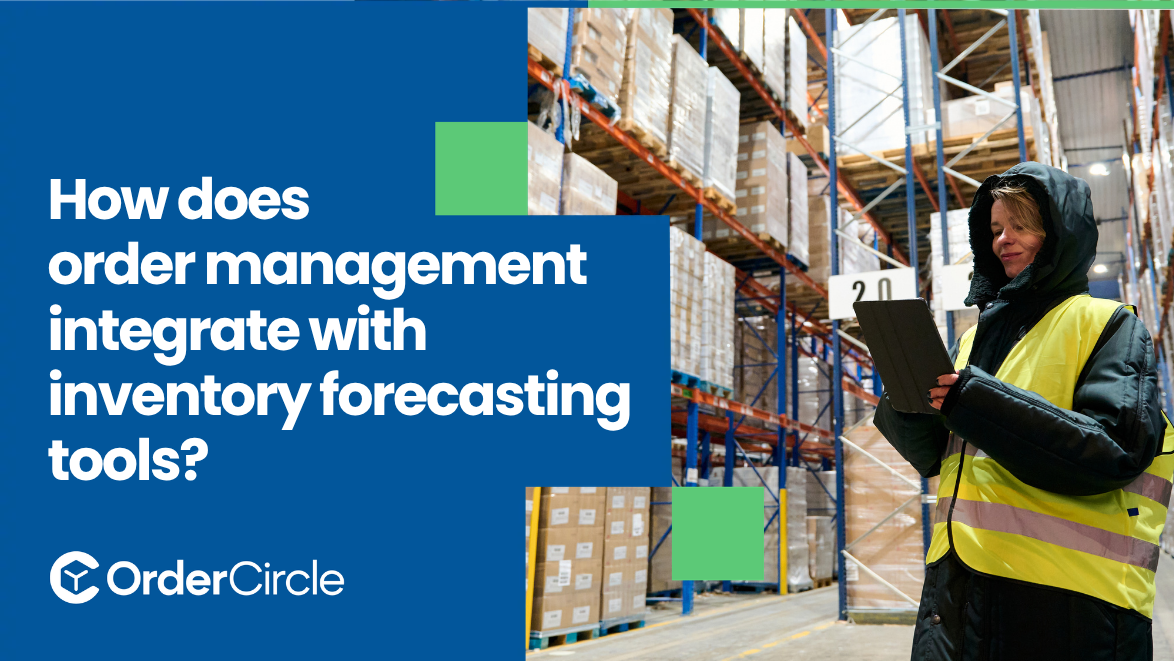
Most wholesale and distribution businesses run their order management and inventory forecasting as separate operations. Orders come in through one system and forecasting happens in another. Someone bridges the gap manually, usually through spreadsheets and a lot of back and forth.
The problem is that the manual bridge is slow and always slightly out of date. When order data does not flow directly into forecasting tools, the predictions those tools generate are built on incomplete information and the purchasing decisions that follow reflect that gap.
Core Takeaways
- Order management and inventory forecasting produce their best results when they share data in real time rather than operating as separate systems.
- Order history, fulfillment patterns and demand velocity are the inputs that make forecasting accurate. All of them are present in the order management system.
- Real-time data sync between the two systems eliminates the lag that causes stockouts and overstock decisions based on outdated information.
- Businesses that connect these systems make smarter purchasing decisions, respond faster to demand shifts and carry less excess inventory.
- When evaluating integrated systems, the key features to look for are real-time sync, forecast models built on actual order history and reorder triggers tied directly to forecast thresholds.
Why Order Management and Inventory Forecasting Need to Work Together?
Order management knows what buyers are actually purchasing, how frequently they reorder and which SKUs move fast versus which ones sit. When the two systems are disconnected, forecasting relies on manually exported data that is already outdated by the time someone runs the numbers. Purchasing decisions get made on estimates rather than evidence and the result is chronic overstock on slow movers and stockouts on the products buyers need most.
The cost of that disconnect shows up in carrying costs, emergency purchasing and lost sales. Businesses that integrate order management with forecasting significantly reduce that gap. Purchasing becomes more proactive, and inventory decisions are based on current demand data rather than assumptions.
How the Integration Actually Works with Inventory Forecasting Tools
Understanding the mechanics behind the integration helps you evaluate whether a system is actually connected or just loosely linked through a manual export that someone has to remember to run.
Order Data Fuels the Forecast
Every order that moves through the system carries information that improves forecasting accuracy. Which products were sold, in what quantities, to which buyers and on what timeline.
When order management connects directly to forecasting tools, that data flows into the forecast model automatically rather than waiting for a manual export. The forecast reflects more current demand patterns rather than relying on manually updated reports.
Real-Time Sync vs. Batch Updates
Batch updates push data from one system to another on a schedule, hourly, daily or weekly depending on how the integration is configured. Real-time sync updates the forecasting tool the moment an order is placed or fulfilled. For businesses with high order volumes or fast-moving inventory, the difference matters.
A forecast built on data that is twelve hours old can trigger a reorder too late or miss a demand spike altogether. Cloud-based order management software that syncs in real time gives forecasting tools the freshest possible data to work from at all times.
How the Data Actually Flows
An order comes in and gets processed through the order management system. That transaction updates the inventory record, adjusts available stock and simultaneously passes the order data to the forecasting tool. The forecasting model recalculates demand projections based on the updated order history. If the updated forecast crosses a reorder threshold, the system can flag the issue or initiate a replenishment workflow, depending on configuration. The entire sequence happens without manual intervention and without the data lag that makes manual bridging unreliable.
Key Benefits of Connecting Order Management With Forecasting
The gains from connecting these two systems go beyond cleaner data. They show up in purchasing decisions, inventory costs and how quickly the business responds when demand shifts.
Sharper Demand Predictions
Forecasting models are only as good as the data they run on. When order history flows directly into the forecasting tool in real time, the predictions reflect actual buyer behavior rather than aggregated estimates. Seasonal patterns, reorder frequency and demand velocity by SKU all become visible and the forecast adjusts automatically as order patterns change rather than waiting for a quarterly review.
Smarter Purchasing Decisions
Buying decisions based on accurate forecasts mean purchasing closer to actual demand rather than building in large buffers to compensate for uncertainty. B2B ecommerce software that connects order data to forecasting gives procurement teams a reliable basis for supplier negotiations, order quantities and timing without relying on gut feel or outdated spreadsheet models.
Less Overstock and Stockout Waste
Overstock ties up capital and generates carrying costs that compound daily. Stockouts lead to lost sales and damage buyer relationships. Both are symptoms of forecasting that does not reflect real demand.
When order management and forecasting share live data, the purchasing decisions that follow naturally reduce both problems because they are based on what is actually happening rather than what someone estimated might happen.
Faster Response to Demand Shifts
Demand does not move on a predictable schedule. A buyer doubles their order volume. A product suddenly moves faster than historical patterns suggested. A seasonal spike arrives two weeks earlier than expected. When order management feeds forecasting tools in real time, the system detects these shifts as they happen and adjusts reorder recommendations before a stockout occurs rather than after.
What to Look for in an Integrated System
Not every system that claims integration delivers it in a way that actually improves forecasting accuracy. Here is what separates a genuinely useful integrated system from one that just moves data between two disconnected tools on a delay.
Real-Time Data Sync
The integration needs to update forecasting data the moment an order is placed or fulfilled, not on a scheduled batch that runs once a day. Any lag between order activity and forecast data creates a window where purchasing decisions are based on information that no longer reflects reality. Real-time sync closes that window entirely and keeps the forecast current regardless of order volume or velocity.
Forecasts Built on Real Order History
A forecasting tool that draws on actual order history rather than broad market assumptions produces predictions that reflect how your specific buyers behave. Look for systems where the forecast model references individual buyer reorder patterns, SKU-level demand velocity and seasonal order trends from your own transaction data. The best wholesale ecommerce platform for this use case is one where order history and forecasting live in the same data environment rather than being bridged through a third-party connector.
Reorder Triggers Tied to Forecasts
Reorder points that update automatically based on forecast changes are significantly more reliable than static thresholds that are set manually and reviewed quarterly. When the forecast detects a demand increase the reorder trigger should adjust accordingly without someone having to intervene. This keeps replenishment proactive rather than reactive.
One View for Orders and Inventory
A single dashboard that shows order status, current stock levels and forecast projections together gives every team member the context they need to make good decisions without switching between systems. When orders, inventory and forecasts are visible in one place, the gaps and imbalances that cause fulfillment problems become obvious before they affect buyers.
Read Also: Can automation improve wholesale business profitability?
Conclusion
Order management and inventory forecasting work best when they share the same data in real time. Disconnected systems create the gaps that lead to overstock, stockouts and purchasing decisions built on outdated information.
Connecting the two removes those gaps and makes every inventory decision more accurate and more timely. If you want order management and forecasting working together in one platform, OrderCircle easily handles it for wholesale and B2B operations.
FAQs
Can order management software improve inventory forecast accuracy?
Yes, directly. Order management holds the transaction data that forecasting models need. When the two connect in real-time, forecasts reflect actual demand patterns rather than estimates and accuracy improves significantly.
What data does order management pass to forecasting tools?
Order history, SKU-level demand velocity, reorder frequency by buyer and fulfillment patterns. These inputs give forecasting models the real-world data they need to generate predictions worth acting on.
Does integration work for businesses with multiple warehouses?
Yes. B2B ecommerce software that supports multi-location operations passes location-specific order data to the forecasting tool.
.svg)


