
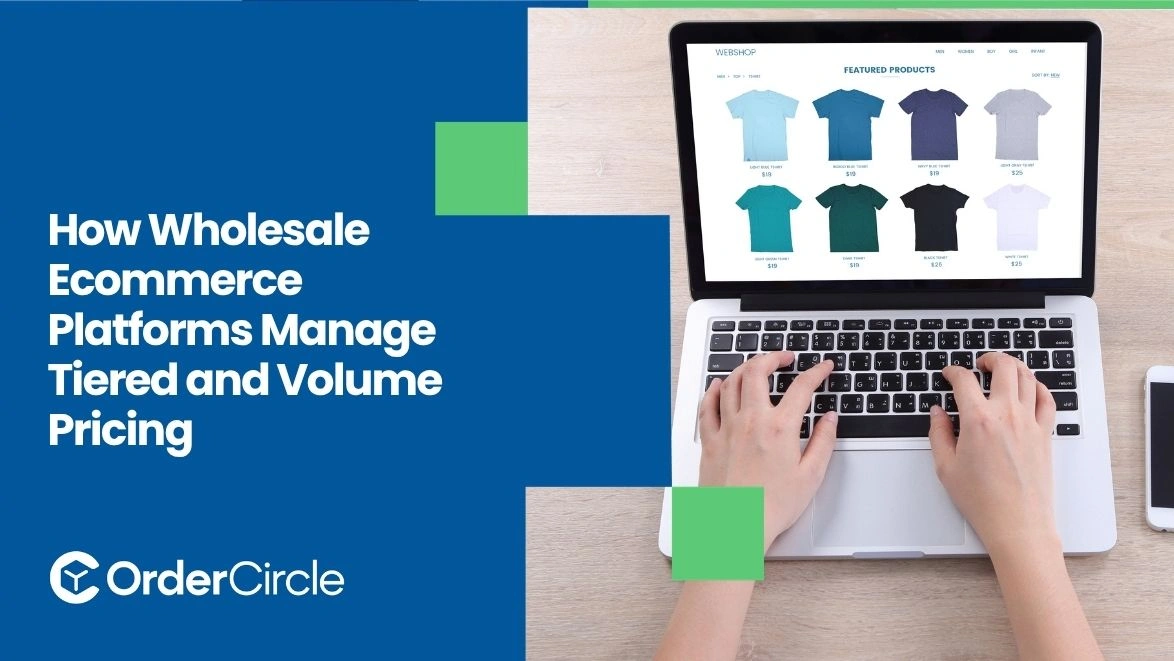
Wholesale ecommerce platforms can manage tiered and volume pricing by applying custom rules based on buyer accounts, order quantities, minimums, and contract terms. Instead of tallying bulk discounts manually, messing with spreadsheets, or emailing updated quotes back and forth, these systems update unit costs on the fly as items land in the cart. VIP accounts get their exact negotiated rates automatically. Meanwhile, volume discounts kick in the second an order meets target unit, weight, or dollar amounts.
Key Takeaways
- B2B ecommerce tools reduce manual price edits by linking discount tiers and contract rates to specific customer accounts.
- Automated quantity triggers adjust bulk prices at checkout, pushing buyers to order bigger loads without needing a sales rep on the phone.
- Cloud platforms sync tier setups across warehouses and ordering tools, keeping wholesale numbers accurate across portals and accounting software.
- Built-in price groups let businesses run separate discount structures for distributors, big corporate accounts, and small shops simultaneously.
Ways Wholesale Ecommerce Platforms Manage Tiered and Volume Pricing
Handling wholesale pricing across different distribution levels gets messy quickly. Relying on printed sheets, manual invoice tweaks, or disconnected spreadsheets leads to costly billing errors and slows fulfillment. Modern portals eliminate those problems by automating complex pricing from the moment a buyer logs in.
1. Assigns Customer-Specific Price Groups in an Ecommerce Portal
Different buyers rarely pay the same wholesale rates. A regional distributor ordering thousands of items monthly expects a much bigger break than a small shop buying once a quarter.
Setting up dedicated B2B Ecommerce Software lets you place buyers into distinct account groups based on purchase volume, account history, or signed contracts. Once a customer logs in to their account dashboard, the platform displays their assigned price list across the entire product catalog. They see only their specific rates, which clears up confusion and keeps wholesale pricing private.
2. Triggers Quantity-Based Breakpoints Automatically at Checkout
Getting clients to place larger bulk orders takes clear incentives. Calculating discounts by hand for 50, 100, or 500 units creates a ton of tedious admin work for your sales reps.
Digital wholesale setups let you plug price breaks straight into your catalog rules. As a customer adds more units to their cart, the system automatically drops the per-item cost. The cart updates totals instantly, showing buyers how close they are to hitting the next discount level.
3. Syncs Tiered Pricing Rules Across the Software
Running an online ordering site alongside phone sales and warehouse tools requires real-time updates. If a rep changes a contract price in your back office, the change must appear online immediately.
Linking sales channels to cloud-based order management software can help keep master price lists consistent across connected systems. Whether an order comes through a tablet in the field, an automated API, or a self-service portal, the platform pulls data from a single central source. Your pricing stays accurate everywhere without anyone re-keying data.
4. Enables Multi-Variant and Category Volume Discounts
Wholesale clients often look for bulk breaks across an entire product family or category rather than a single standalone item.
Modern platforms make it easy to set volume discount tiers across product lines and variant options. The system applies quantity breaks as buyers build out their order size, ensuring bulk pricing triggers correctly across matching items without requiring sales reps to adjust line items manually.
5. Supports Minimum Order Quantities (MOQs) and Case-Pack Rules
Protecting profit margins on bulk goods means enforcing order minimums so your warehouse crew isn't opening master cartons to package small, single-item orders.
Wholesale sites let you lock order fields to specific case numbers or set strict cart Minimum Order Quantities (MOQs). Buyers cannot hit the checkout button unless their cart meets the required baseline criteria. This protects your shipping margins and keeps warehouse packing routines moving fast.
6. Configures Flexible Promos and Seasonal Volume Tiers
Wholesale brands regularly launch promotional rates to move extra stock, roll out new lines, or encourage early seasonal orders. Managing temporary bulk discounts manually often leads to old promotional rates staying live longer than they should.
Digital platforms let you set up custom promo codes and temporary discount tiers with ease. You can offer deeper volume cuts during slow months to clear out warehouse space, then quickly turn off or adjust the promotion whenever your campaign wraps up.
7. Tracks Customer Credit Limits and Custom Payment Terms
B2B sales rely on custom payment terms such as Net 30 or Net 60. However, tracking varying payment terms and credit limits across hundreds of active buyers gets messy fast. Advanced wholesale portals maintain detailed records of customer credit limits and approved payment terms directly within each account profile.
During checkout, the platform evaluates the buyer's assigned terms, ensuring that repeat orders follow pre-approved contract guidelines and helping your team maintain tight control over account balances.
8. Manages Multi-Currency and Regional Tiered Pricing
Selling wholesale across borders introduces extra friction. Currency shifts, import duties, and local freight costs mean a volume break that works in one country might burn through your profits in another.
Enterprise portals support region-specific price lists tied to local currencies. You can set up custom volume breaks for USD, EUR, or CAD while factoring in local shipping costs. International buyers get clear, currency-matched numbers designed specifically for their market.
9. Leverages the Best Ecommerce Software for Fast Reordering
High-volume B2B buyers value speed over flashy storefronts. They want to log in, restock their core inventory, and check out without clicking through retail-style category pages.
Using the best wholesale ecommerce platform gives your accounts fast reordering tools like quick-add SKU forms, past order duplicate buttons, and simple reorder lists. Returning buyers select their frequent purchases, let the software apply their volume tiers, and finish checkout quickly.
10. Automates Invoicing and Accounting System Syncs
Applying tiered discounts inside your online store isn't very useful if those numbers don't flow cleanly into your bookkeeping software. Copying line items manually into tools like QuickBooks or Xero opens the door to ledger errors.
Modern wholesale platforms push completed, discount-adjusted sales data straight into your accounting apps. The integration can transfer final unit costs, applied discounts, and billing details to connected accounting records, reducing manual data entry and reconciliation work.
Conclusion
Ditching paper price sheets and switching to automated wholesale tools makes bulk selling much easier. Setting up automatic volume tiers, buyer-specific price groups, and live inventory syncs protects your profit margins while giving clients a friction-free way to order.
You eliminate billing errors, speed up warehouse packing, and give your team more time to grow the business. Ready to automate your bulk pricing and scale your wholesale operations without the hassle? Check out OrderCircle to see how cloud order management can transform your B2B sales!
Frequently Asked Questions
How do customer-specific price groups work in wholesale ecommerce?
Customer price groups link specific buyers to custom price lists. When a client logs into their account portal, the platform automatically displays their pre-negotiated contract rates across all products instead of standard wholesale prices.
Can volume discounts apply to a mix of different product variants?
Yes. Modern B2B platforms let you set up category-level or multi-variant volume rules. The software calculates total quantities across different product options and applies the bulk discount once the overall count hits your target threshold.
What happens if an order doesn't meet the Minimum Order Quantity (MOQ)?
The platform prevents the customer from completing checkout until their cart meets or exceeds the required MOQ or case pack count, ensuring your warehouse operations remain efficient and profitable.
.svg)


