
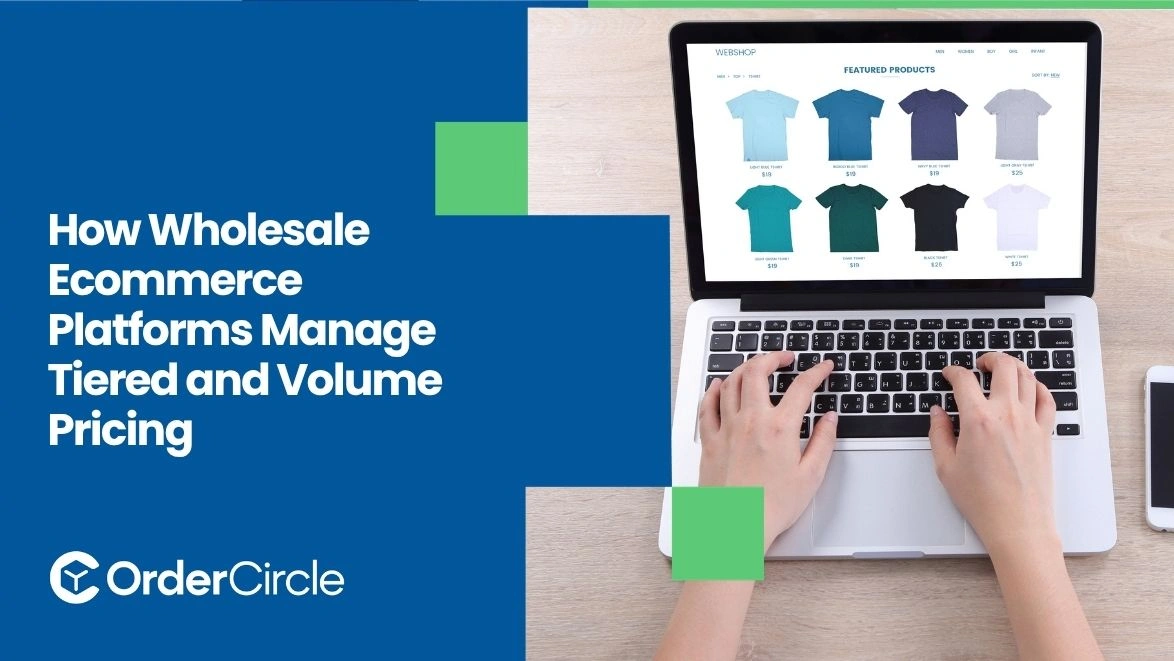
Managing custom pricing in wholesale operations requires moving away from static rate sheets and manual quote calculations. Custom contracts, regional tax structures and volume commitments mean two commercial buyers rarely pay the same price for the same product.
Modern platforms solve this complexity by linking tailored pricing rules directly to individual buyer profiles inside a centralized catalog. As accounts log into their portal, unit costs, contract rates and quantity breaks adjust automatically in real time, eliminating manual errors and delivering accurate pricing across every order.
Key Takeaways
- Personalized account rules automate custom contract rates, eliminating manual quote calculations and billing errors.
- Multi-tiered pricing matrices allow businesses to assign different wholesale rates based on purchasing volume or buyer groups.
- Direct system integrations keep customer-specific pricing aligned across accounting, sales and inventory platforms.
- Self-service portals provide wholesale clients with instant visibility into their negotiated catalog rates without calling a sales rep.
Ways B2B Ecommerce Software Handles Customer-Specific Pricing
Managing personalized pricing across extensive buyer networks presents significant operational challenges. Relying on paper rate sheets, offline spreadsheets or manual invoice revisions slows sales cycles and increases risk. Automated platforms streamline complex pricing routines from the moment a buyer accesses their account.
1. Assigns Account-Based Price Groups
Wholesale buyers operate under varying commercial terms based on order history, region or contract negotiations. Applying a single sitewide pricing model fails to account for these unique relationships or maintain healthy margins across distribution channels.
Digital catalogs solve this by grouping buyers into distinct account tiers based on account size, agreement terms or lifetime value. Upon logging in, the system checks account attributes and loads only the designated price sheet. Buyers view their exclusive rates across all product lines, protecting contract confidentiality and ensuring pricing consistency throughout the sales pipeline.
2. Streamlines Contract Rates
Corporate clients often negotiate custom pricing for specific SKUs as part of long-term purchasing agreements. Managing these individual agreements manually creates administrative friction for sales and support teams and frequently leads to billing discrepancies on recurring restocks.
Leveraging specialized B2B ecommerce software allows businesses to attach custom price overrides directly to individual account profiles. When an account holder accesses the catalog, the software replaces standard rates with their exact contract pricing, ensuring accurate billing without manual intervention from sales representatives or back-office staff.
3. Triggers Dynamic Tiered Discounts by Volume
Encouraging larger order quantities requires clear pricing incentives that react dynamically as clients build their carts. Manually calculating quantity breaks during order review adds unnecessary delay to the fulfillment pipeline and frustrates buyers looking for immediate quote confirmations.
Modern systems automate volume breakpoints directly within the catalog interface. As a buyer increases the quantity in their cart, the system dynamically adjusts the per-unit cost based on preconfigured rules. The updated subtotal displays instantly, showing buyers how close they are to reaching the next discount threshold and driving higher average order values.
4. Enforces Custom Minimum Order Quantities (MOQs)
Protecting profit margins requires enforcing baseline order volumes so warehouse operations remain efficient and cost-effective. Shipping undersized bulk orders rapidly erodes profitability through excess handling and packaging costs.
Wholesale platforms let you configure Minimum Order Quantities (MOQs) and case-pack rules tailored to specific buyer groups or product lines. The checkout system evaluates cart quantities against these established rules, preventing order completion until the required minimums are met and ensuring that fulfillment teams process only cost-effective cart sizes.
5. Syncs Negotiated Rates
Running multiple sales channels alongside field operations requires real-time pricing synchronization across every client touchpoint. If a contract rate changes in your office system, that update must reflect on online portals immediately to prevent misquoting.
Connecting ordering channels to B2B order management software keeps every master price list unified across your entire operation. Whether an order enters through a sales rep's tablet, an automated integration or a self-service client portal, the system pulls from one central data source to maintain pricing accuracy and protect your margins everywhere.
6. Supports Currency and Tax Adjustments by Region
Cross-border wholesale transactions involve additional complexity due to shifting currency exchange rates, regional tax laws, and local shipping costs that vary by fulfillment origin and destination.
Enterprise catalog tools manage localized price groups assigned to specific geographic territories and currencies. You can configure volume tiers for different currencies while factoring in local shipping surcharges, tariffs, and regional taxes. International buyers see clear, localized pricing tailored to their market, eliminating post-purchase invoice adjustments.
7. Controls Catalog Visibility by Account Profile
Certain wholesale products, custom-branded items, exclusive distributor lines or restricted goods should only be accessible to specific client accounts. Showing irrelevant or restricted inventory complicates navigation and leads to unfulfillable orders.
Advanced catalog systems allow you to set visibility permissions alongside pricing rules. Accounts see only the specific product categories and tailored pricing structures assigned to them, preventing unauthorized orders, reducing catalog clutter, and simplifying the reordering experience for returning commercial clients.
8. Accelerates Sales Workflows Using Softwares
Sales representatives frequently need to place orders on behalf of clients, adjust line-item quotes during live negotiations or issue fast, customized proposals for special orders without administrative bottlenecks.
Deploying dedicated B2B sales order management software empowers sales teams to access client profiles, review pre-negotiated rates, and build customized draft orders in real time. The software automatically applies the buyer's contract pricing and payment terms, speeding up order approvals, eliminating manual calculations, and freeing up reps to focus on strategic growth.
9. Connects Custom Terms to Financial and ERP Software
Applying specialized pricing on web portals is ineffective if those figures fail to sync accurately with back-office accounting platforms, leading to end-of-month reconciliation delays and ledger errors.
Modern platforms push completed, price-adjusted order data straight into accounting tools like QuickBooks or Xero. The system aligns final line-item costs, applied tax rules, special discounts, and account-specific payment terms directly with customer ledgers, maintaining accurate financial records without double-entry work or manual auditing.
10. Enables Flexible Promotional Discounts and Seasonal Tiers
Wholesale brands regularly run limited-time sales to clear out surplus inventory, launch new product lines or drive pre-season orders before peak demand shifts. Managing temporary price changes manually across hundreds of accounts often leads to outdated rates persisting longer than intended.
Digital catalog tools allow you to schedule promotional pricing tiers with precise start and end parameters. You can offer temporary price adjustments for specific account groups, with the system automatically reverting to standard contract pricing once the promotion completes, ensuring complete control over campaign margins.
Conclusion
Automating customer-specific pricing streamlines wholesale operations and eliminates the friction of manual contract management. Tying custom price tiers, volume breakpoints, and account rules directly to buyer logins protects profit margins, cuts administrative overhead, and delivers a seamless ordering experience for commercial accounts. Ready to simplify custom pricing and scale your wholesale operations? Contact OrderCircle to see how a dedicated B2B ordering platform can transform your sales workflow!
Frequently Asked Questions
How does account-based pricing work in wholesale ecommerce?
Account-based pricing links specific buyer logins to custom price sheets. When a customer logs in to their portal, the system displays their pre-negotiated contract rates for all products rather than standard wholesale pricing.
Can different volume discounts be applied to different customer groups?
Yes. Wholesale platforms allow you to set unique volume discount tiers for different account groups, ensuring high-volume distributors receive deeper price breaks than smaller accounts.
How do pricing updates sync with back-office accounting software?
Modern platforms integrate directly with accounting tools like QuickBooks and Xero. When an order is processed, the final prices, tax calculations, and payment terms can transfer automatically to your ledgers.
.svg)


