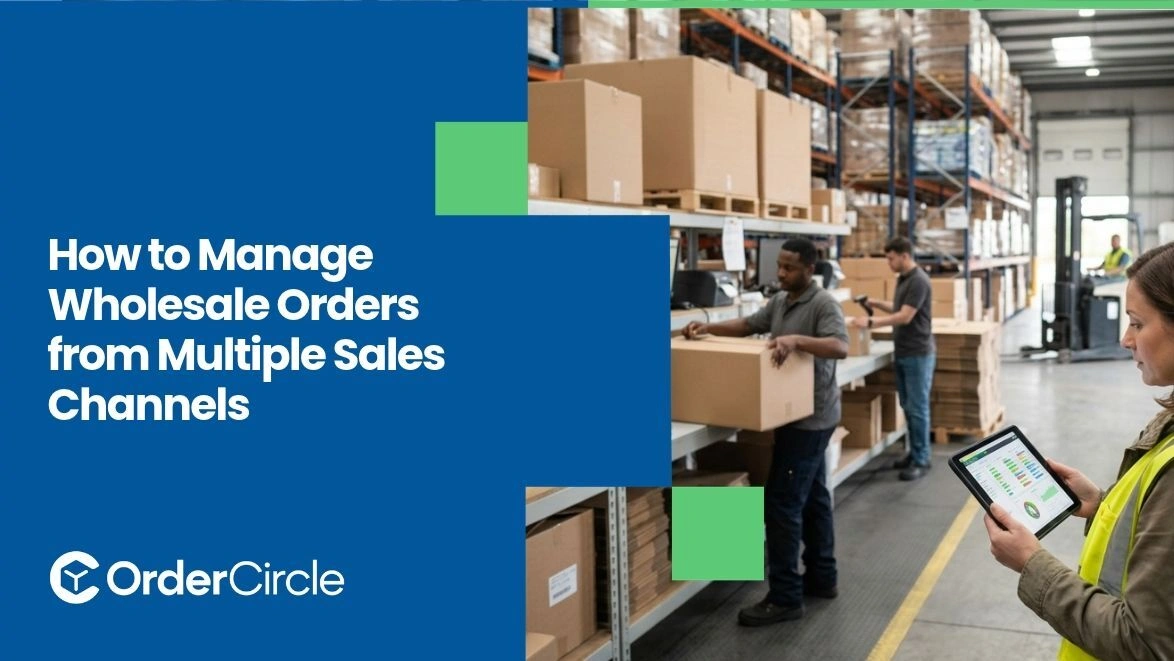
Orders come in through a Shopify B2B portal in the morning. Faire sends over three more by lunch. Email orders from longtime accounts drop into the sales inbox all afternoon. The warehouse can't see any of this coherently unless something ties it together.
The answer is one central order management system, consistent data flowing in and out, and workflows that treat every channel the same once an order lands. That's what managing wholesale orders across multiple sales channels really requires at scale.
Key Takeaways
- Pile Shopify, Faire, Amazon, email orders, and your rep's spreadsheet into one system that calls them all orders. One queue, one status, one truth.
- Inventory must update in near real time across channels. Selling the same case to a Faire buyer and a wholesale portal customer because inventory lagged by six hours is painful.
- Standardize how an order moves from entry to shipment, regardless of where it came in. The warehouse shouldn't need a different process for Faire orders versus phoned-in ones.
- A worthwhile order management system integrates with your ecommerce platforms, shipping tools, and accounting software so data moves once, not three times.
Effective Strategies to Manage Wholesale Orders From Multiple Sales Channels
Six strategies cover most of the heavy lifting when orders are arriving through multiple channels and your team needs them to behave like one coherent pipeline.
Centralize Orders in One Order Management System
The foundation is a single system where every order lands, regardless of source. Not a Shopify dashboard, not a Faire seller portal, not an inbox. An order management system that pulls from all of them and gives you a single queue to work from. Without this, scaling across channels means scaling the chaos.
Synchronize Inventory Across All Sales Channels
Inventory updates need to flow across every channel in near real-time. When Faire sells 20 cases of hot sauce, your Shopify B2B portal should know within minutes, not at tomorrow's overnight sync. The alternative is overselling, apologies, canceled orders, and a reputation that suffers a bit each time.
Standardize Order Processing and Fulfillment Workflows
Once an order enters the system, the next steps shouldn't depend on its source. Pick, pack, ship, invoice. Faire orders and phone orders walk the same path. The ops team learns one workflow instead of seven. Error rates drop because people aren't context-switching between channel-specific quirks all day.
Maintain Consistent Customer Data and Wholesale Pricing
Wholesale accounts negotiate specific pricing. If that pricing lives in three different places (your ERP, your Shopify B2B settings, your sales rep's notes), one of them will be wrong when an order comes in. Centralized customer records and channel-specific pricing rules help maintain accurate quotes and invoices across sales channels.
Automate Order Updates, Invoicing, and Shipment Tracking
The least rewarding work in order management is manually updating statuses, writing invoices, and emailing tracking numbers. All of it can be automated. The order status updates when the warehouse ships. The invoice generates and sends when the shipment is confirmed. The tracking number lands in the customer's inbox without anyone typing it.
Group Orders for Bulk Processing and Fulfillment
When five Faire orders need the same SKU, picking them together is faster than picking them one at a time. Group orders by SKU, route, customer, or whatever makes the warehouse day easier. The ops savings compound at higher volumes, and your pickers spend less time walking the same aisle.
How to Manage Different Wholesale Sales Channels in One Workflow
Not every channel behaves the same way. Each has its own order format, timing, and compliance quirks. Treating them identically in your system doesn't mean ignoring the differences at the source.
Wholesale Ecommerce Stores and B2B Portals
B2B portals and wholesale ecommerce stores (think Shopify B2B or a custom self-serve site) send orders directly into your system through APIs or EDI. The buyer has already logged in, seen their price, and placed the order. Your job is mostly to accept, confirm, and fulfill. These are the cleanest orders you'll handle.
Online Marketplaces and Retail Partners
Faire, Alibaba, Amazon Business, Walmart Marketplace, Target Plus. Each has its own seller portal, data format, and compliance guide. Many support direct API or EDI integration. The ones that don't may need middleware to pull orders into your central system. Marketplace fees and compliance timings vary wildly between them. Track each one separately in your reporting.
Orders Received by Email, Phone, and Sales Representatives
The oldest channel still shows up every day. A longtime account emails a reorder. A sales rep writes down an order from a trade show. These need to end up in the same system as every other order, usually through a form or quick-entry interface the rep can use from their phone. Treat them with the same workflow discipline as a Faire order and they stop being the problem child.
How Does an Order Management System Simplify Multichannel Wholesale Operations?
An order management system worth its subscription earns the money through four specific capabilities. Each one solves a problem that multichannel operations create on their own, usually when nobody is watching.
Real-Time Order and Inventory Synchronization
Orders from any connected channel appear in the system within minutes of being placed. Inventory counts update as orders ship. Nobody has to export CSVs from Shopify and reconcile against the ERP every evening. Synchronization may happen in real time or at scheduled intervals, depending on the platform and integration.
Centralized Order Status and Fulfillment Visibility
Any team member can pull up an order and see where it stands: received, picked, packed, shipped, delivered, invoiced. No tool-switching. A customer service rep answering a question about an order from Faire sees exactly what the warehouse team sees.
Integration With Ecommerce, Shipping, and Accounting Tools
The order management system connects outward to the tools you already use. Shopify, Faire, QuickBooks, Xero, ShipStation, FedEx. Data flows in and out automatically. The one-time integration setup replaces an ongoing cost in manual data entry across those systems.
Reporting Across Sales Channels
Channel-level reporting shows which channels drive which customers, which SKUs sell where, and where margin lives. The weekly sales report breaks down by channel. The monthly P&L assigns costs correctly. Decisions about where to invest become data-driven instead of based on which channel's dashboard was open last.
Best Practices for Managing Wholesale Orders Across Multiple Channels
A handful of best practices separate the operations running smoothly from the ones constantly putting out fires. The highest-return ones look like this:
- Audit your channels quarterly. Drop ones that cost more to maintain than they bring in. Low-volume channels with high compliance overhead rarely earn their keep.
- Set up alerts for low inventory before stock runs out, not after. Reorder points per SKU catch most problems before customers do.
- Keep customer data centralized and sync relevant account details, pricing, and shipping information across connected channels.
- Review channel margin quarterly. Faire's commission varies by order type and customer relationship, while Shopify B2B has subscription and payment processing costs. Comparing each channel's total costs helps you decide where to grow.
- Document every workflow exception. That one-off thing you do for a retailer this month will show up again. Written exceptions get followed; mental ones get forgotten.
- Run a weekly 15-minute channel review with ops, sales, and finance. Everyone sees the same numbers at the same time. Problems surface before they compound.
Conclusion
Multichannel wholesale is where most growing distributors end up. Each new channel brings customers along with complexity: its own order format, timing, compliance rules, pricing quirks. To keep that complexity from eating your ops team, start with one central order management system where every order lands, inventory syncs across channels in near real time, and workflows don't depend on where an order came from.
If you're looking for a platform built for exactly this kind of multichannel wholesale operation, OrderCircle brings orders from your sales channels into one place, syncs inventory across them, and connects to the shipping and accounting tools you already use. Start the free 14-day trial.